
Dolmabahce Palace Photos
What does Dolmabahçe Palace look like? This gallery follows the visit from the outside in: the marble front from the Bosphorus, the gate and gardens where you enter, the clock tower landmark and the waterfront terrace where the route ends. One honest note — photography is not allowed inside the palace rooms, so the single interior view here is a labelled artistic impression, not a photograph.
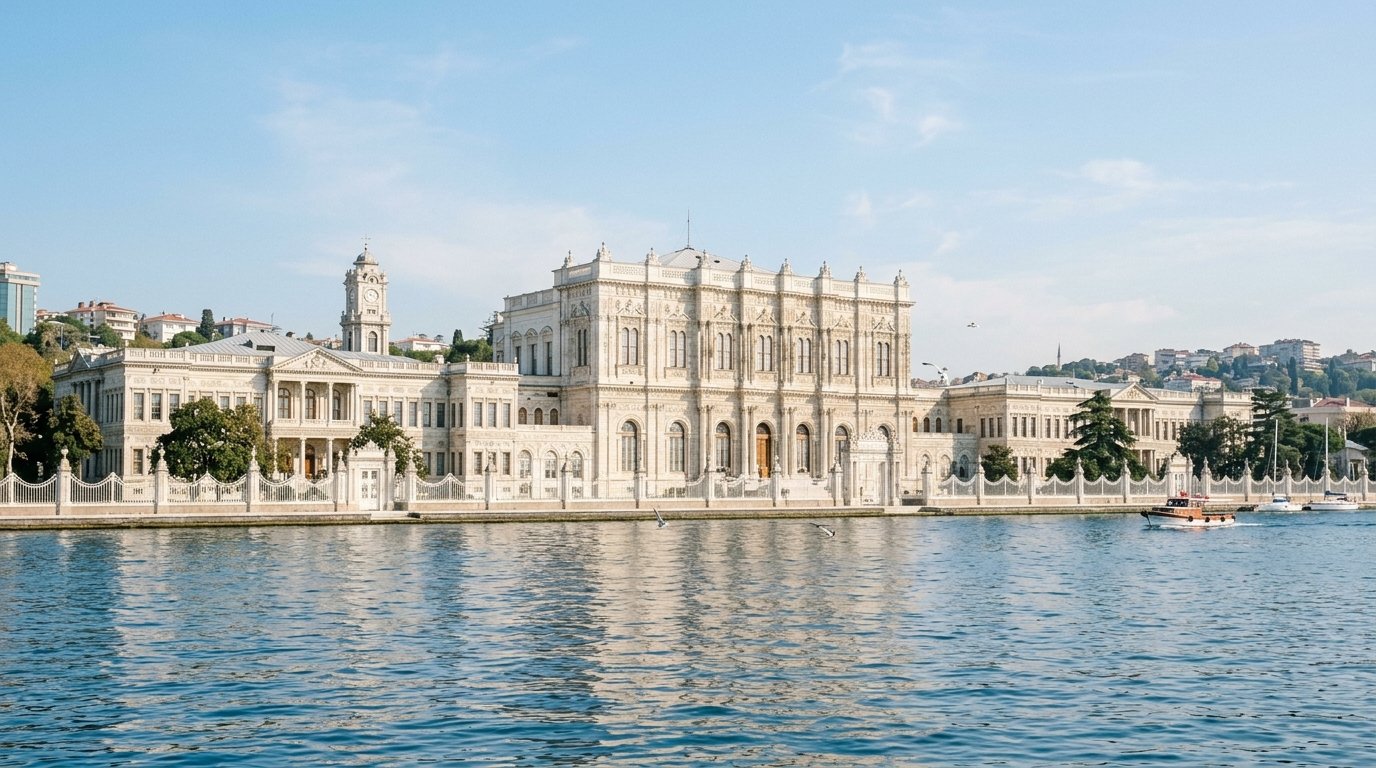
The façade from the water
Dolmabahçe’s 600-metre marble front seen from the Bosphorus — the view the palace was designed around, and still the best first look at it.
The palace was built to be read from the sea: ambassadors and sultans alike arrived by boat, and the whole composition — wings, gates, the raised Ceremonial Hall at the centre — faces the water. Any Bosphorus ferry or cruise passing Beşiktaş gives you this view; sit on the European side of the boat.
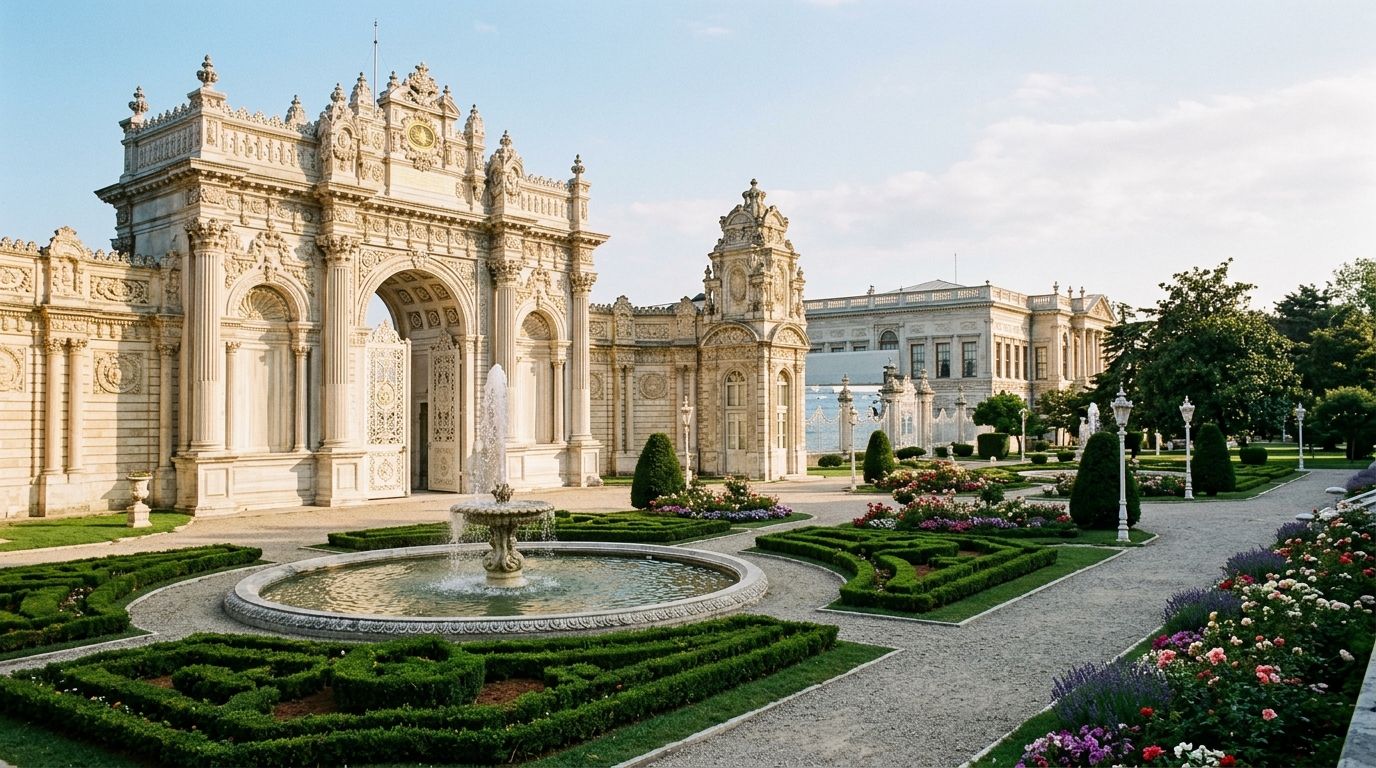
The Treasury Gate and gardens
The Treasury Gate — the visitor entrance — with the formal gardens that sit between the street and the palace proper.
This is where your visit starts: through the ornate gate on Dolmabahçe Caddesi, past security, and into gardens laid out in the European style with fountains, parterres and exotic trees. The gardens are worth unhurried time on the way out, when the entry adrenaline has worn off.
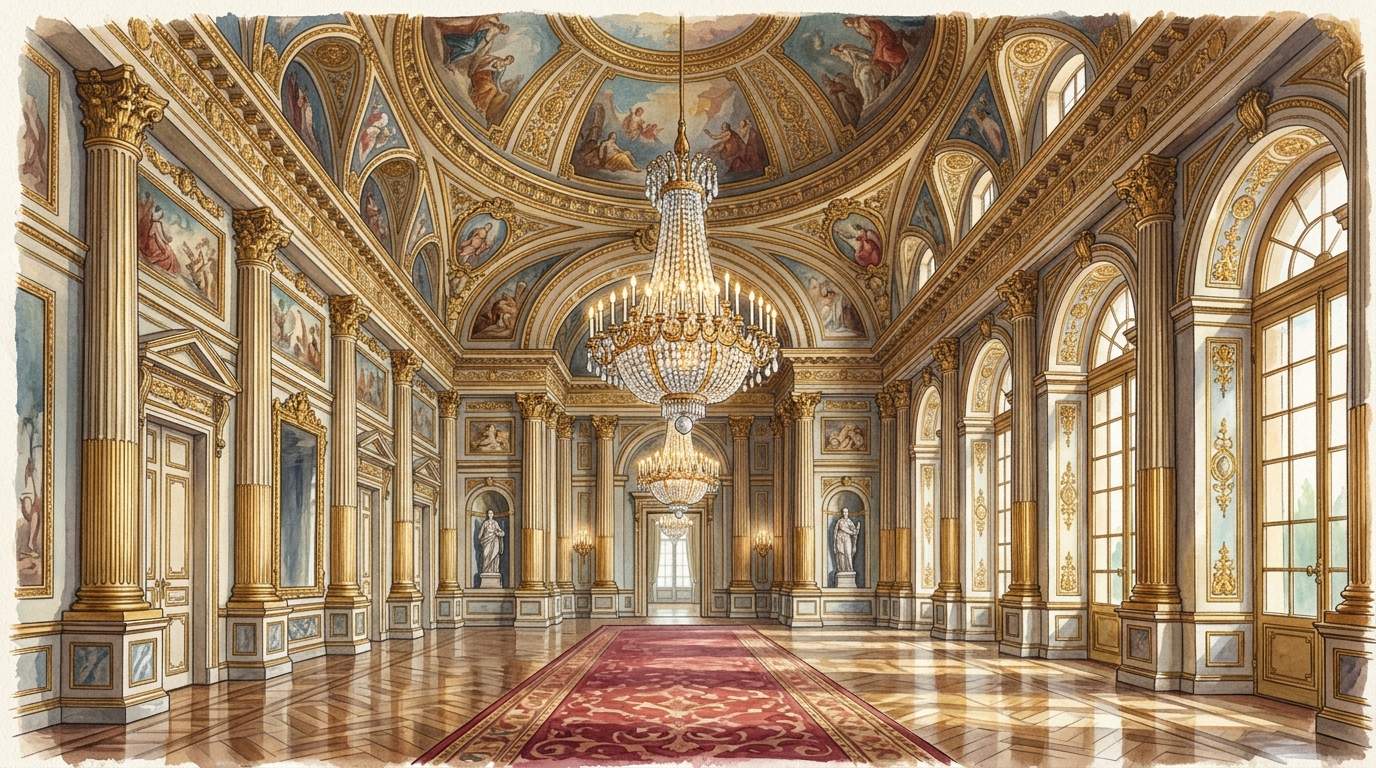
The state rooms — an impression
An artistic impression of the palace’s gilded halls. Photography is not permitted inside the real rooms — one more reason they stop first-time visitors mid-step.
Interior photography is banned at Dolmabahçe, so no gallery can show you the real thing. This rendering gives the flavour: double-height ceilings, gold leaf by the kilometre, crystal overhead and the Bosphorus light pouring through tall windows. The genuine article is considerably more excessive — see what the route covers on our inside-the-palace page.
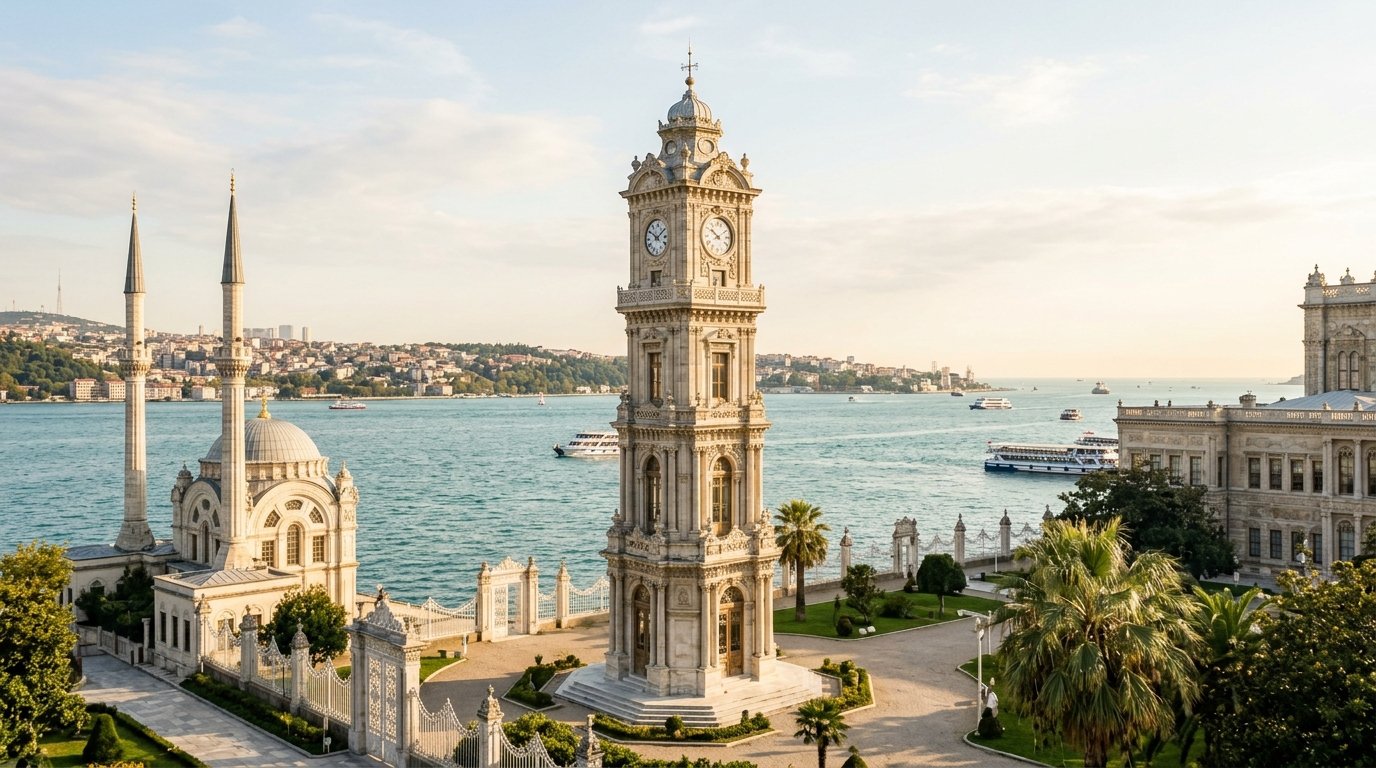
The clock tower
The 27-metre clock tower outside the palace gates, with the Bosphorus behind — the landmark that tells you that you have arrived.
Walking up from Kabataş, the slender four-storey tower is your first sight of the complex and the marker for the visitor entrance nearby. There is a pleasant café at its foot with waterfront tables — the standard pre-visit meeting point.
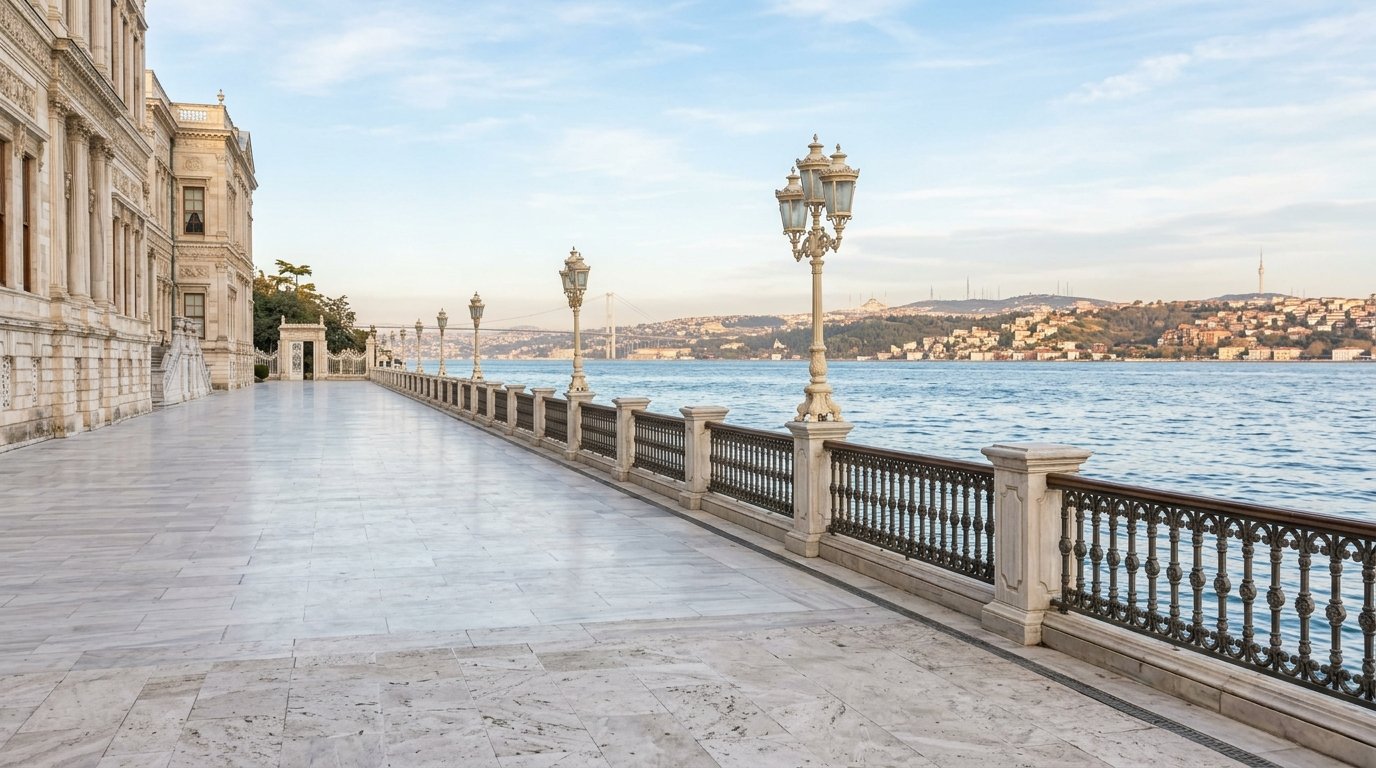
The Bosphorus terrace
The palace’s marble quay, with the strait a step away and the Asian shore opposite — the calmest spot on the whole visit.
Between the palace and the water runs a long balustraded terrace where sultans once boarded their caïques. Visitors reach it at the end of the route, and it is the place to linger: ships sliding past, gulls working the wake, and the whole façade at your back. Late-morning light is kindest here.
Why the camera stays in the bag
The interiors are the point of Dolmabahçe, and they are exactly what you cannot photograph — the ban is enforced room by room, which is why searching for pictures from inside mostly turns up old or official imagery. Treat it as a feature: for two hours the palace has your full attention. Read what the rooms actually hold and how the Selamlık and Harem divide the route, then check the opening days — Mondays are closed — and plan the rest of the visit around the morning light on the waterfront.